ARE handbook PPD Question - wall type

Hi, I am a bit confused on the wall types between 2 and 3. under what situations we pick one over the other?
Thanks!!!
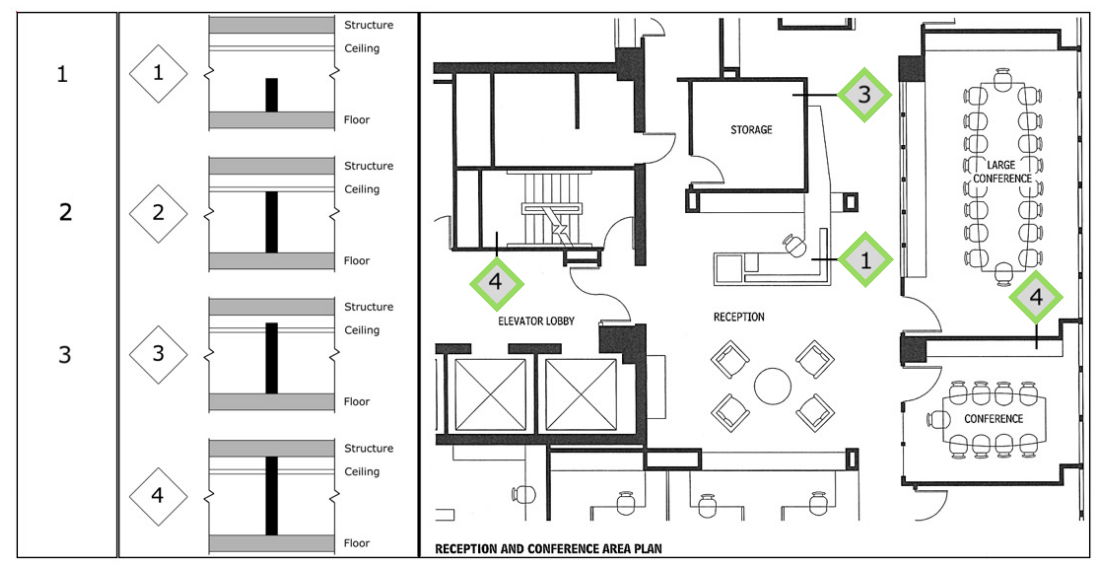
-

You can find the answer by considering fire protection and the use of the spaces. Look for clues in the question. The wall around a stair needs to be thoroughly protected from smoke and flame spread. A receptionist needs to be able to see the reception area. Adjacent conference rooms have acoustic requirements (you don't want the voices from meeting next door to prevent you from hearing the people in your own meeting). What's the size of the storage area? Is it small enough to qualify as an incidental use therefore not requiring a higher level of fire protection?
-

Nicolle - it has to do with acoustics. In a conference room, where surrounding noise would be a distraction to meetings, you would typically want a wall that extends to the deck to serve as a barrier from surrounding noise. Wall type 3 does not extend to the deck. Sound can travel right over it from one room to another. Wall type 4 is a continuous barrier from floor to deck. That's why you'd want it.
In wall type 3, yes, the ceiling tile helps reduce some of the sound transfer and certainly there are products out there that could really reduce sound just with the ceiling tile. This question being about walls though, you should ignore that and just focus on which wall assembly would best perform. It's always best for walls to go to deck when you need better acoustic isolation.


Please sign in to leave a comment.
Comments
6 comments