Vapor Barrier

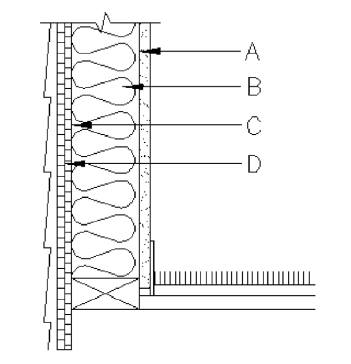
Hi, this is from an old NCARB BDCS mock exam. Trying to determine vapor barrier locations in a simplified way. The more I read about this topic the more confused I get! My understanding is:
D: Warm/Humid Climate
A: Cold Climate
A : Mixed Climate (Warm Summers, Cool Winters) - because the wall still needs to 'dry out'
Any input would be appreciated!
-
Thanks! Thats what I would've thought as well although the answer provided by NCARB for hot/humid is actually D not C. See attached screenshots from the exam guide. Not sure why it doesn't really make sense to put a vapor barrier between two layers of exterior sheathing.. maybe someone from NCARB can comment.


-

Jennifer - this graphic is a bit misleading as it happens with standardized tests. II would assume the wall assembly breakdown from interior to exterior would be drywall, insulation between studs, sheathing, wood strapping (rainscreen), and exterior cladding. Since it's in hot and humid climate, the vapour barrier would be on the warm side of insulation. Regarding the exact location for vapour barrier, it makes sense to put it on top of plywood (C), as plywood would provide relatively uniform support surface for the membrane tie-in and seal.
-

From working out in construction for 10+ years and my studying for the exams ... A & D are the closest but they are pointing to the wrong side of the material.
I'm not saying I'm right, but this is how I understand it. You want your vapor barrier on the warm side but NOT WITHIN the wall cavity. You don't want any moisture to build up within your wall and get trapped. I've done demo work on houses that have had this issue and it's an ugly site to think that someone was living and breathing the air in that space.
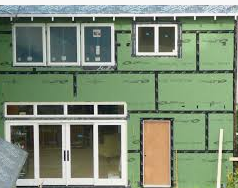
So when it's on the inside it's done with a latex paint and when it's needed on the outside it's done with the large home wrapping material or a zip system type sheathing. Zip system is that greenboard and tape that you see on some houses under construction(see clip below). That type of sheathing material has the air barrier built into it and the tape is supposed to seal the seams. So you don't have to wrap the building with anything else (besides the ext. cladding)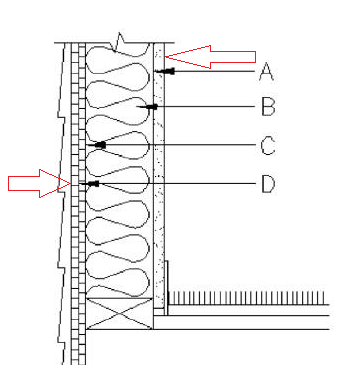
-

I agree with Canuto as I worked in construction for many years, and live in south Florida where the vapor barrier goes on the exterior side of sheathing not interior touching the framing or structure. However, when I lived in Boston we installed the vapor barrier on the interior side of the exterior framing before the drywall layer...I don’t know if I’m proud of that, because after reading about the “perfect wall” it seems best to always place insulation and vapor barriers, and critical air gap aka the control layer - then protected by a cladding system on the outside of the structure (not interior), no matter the climatic region. You simply adjust the Rvalue of the wall per dew point.

Please sign in to leave a comment.
Comments
5 comments